

Simulator Development
Making History Move
Turning an original F-111 escape capsule into a working flight simulator
The Challenge
From Crew Module to Cockpit Simulator
Before beginning the challenge of turning an original F-111 crew module into a working simulator, it helps to look at a project already demonstrating what can be achieved: Oz Hornet.
Oz Hornet is an relica Australian F/A-18 cockpit simulator build based partly on OpenHornet, a community project providing hardware and software designs for a full-scale F/A-18C simulator connected to Digital Combat Simulator.
Through its Facebook page, Oz Hornet documents the process of building a cockpit panel by panel. Controls, displays, lighting, electronics and structural components are brought together to transform a collection of parts into an immersive flying environment.
That journey closely reflects what now lies ahead for F-111E 68-0040.
The important difference is that our F-111 project begins with a genuine aircraft escape capsule containing original structures, instruments, switches and controls. These components were never designed to communicate with a modern computer, so each system must be inspected, restored and carefully interfaced without losing its historical character.
Oz Hornet provides both inspiration and practical lessons. It demonstrates the value of dividing a complicated cockpit into manageable systems, documenting the wiring, testing each panel individually and combining authentic hardware with modern simulation technology.
The aircraft may be different, but the preservation philosophy is the same.
Original Hardware
The Important Difference
"We are not simply placing screens inside an old cockpit. We are using technology to make aviation history move, illuminate and respond again."
Oz Hornet shows the path. The F-111 is our next challenge.
Our Approach
How We Work
System by System
Dividing the cockpit into manageable systems — each panel inspected, documented and tested individually before integration.
Authentic Hardware First
Original instruments, switches and controls are preserved and interfaced with modern electronics rather than replaced.
Document Everything
Every wire, connector and modification is recorded so the work can be understood, maintained and built upon by others.
Make It Respond
The goal is a cockpit that moves, illuminates and responds — aviation history brought back to life through simulation technology.
Technical Approach
DCS Interface and Instrument Conversion
Converting the F-111 crew module into a working simulator will require a bridge between the original aircraft hardware and Digital Combat Simulator. DCS will provide airspeed, altitude, engine performance, fuel state, navigation data, warnings and aircraft configuration.
That information will be exported from the simulation computer and sent to purpose-built interface electronics. Microcontrollers and input/output boards will translate the digital data into signals that the original cockpit can use. Depending on the instrument, this may involve servos, stepper motors, digital-to-analogue converters, relays or driver circuits.
The process will also work in the opposite direction. Original switches, buttons, throttles, flight controls and selectors will be connected to interface boards, allowing them to control the simulated aircraft.
Every instrument will be assessed. Some may be operated through original mechanisms, while others may require discreet internal conversion or a reproduction display fitted behind the original face. Wherever possible, changes will be reversible and every component's original appearance will be preserved.
The conversion will be completed panel by panel, with every circuit documented and tested separately. Ultimately, the goal is for the cockpit to respond naturally: switches will function, warning lights will illuminate, gauges will move and the crew module will feel alive again.
Preliminary Testing
Outputs and Interface Testing
Early testing confirms that DCS can export live flight data and that the interface electronics can receive and process it. The screenshots and footage below show preliminary outputs — airspeed, altitude, heading, pitch, bank and angle of attack — being read from the simulation in real time.
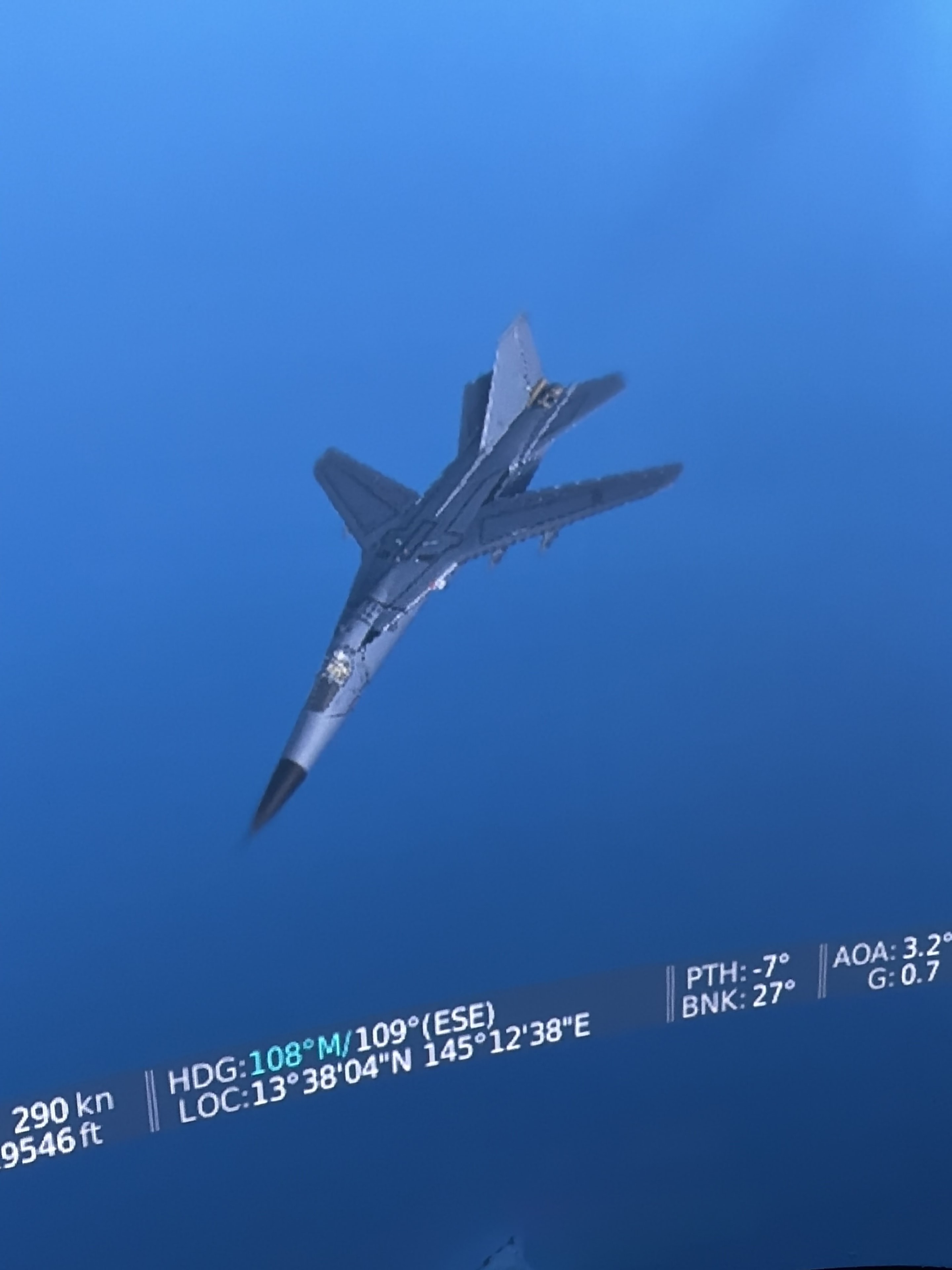
DCS F-111 — live telemetry overlay showing airspeed, altitude, heading, pitch, bank and angle of attack
Interface output test — instrument drive signals
Interface output test — instrument drive signals
Community Inspiration
Oz Hornet — Inspiration and Lessons
Oz Hornet is an Australian project building a full-scale F/A-18C simulator using OpenHornet designs and custom software connected to Digital Combat Simulator. Its Facebook page documents the build panel by panel, offering both inspiration and practical guidance for projects like ours.
DCS Module Credit
The DCS F-111 module used in our preliminary testing was created by Warpig Productions. Their work makes it possible to fly and test the F-111 in Digital Combat Simulator.
Warpig Productions F-111 DCS ModWant to Help?
The simulator project needs technical expertise, avionics knowledge, electronics skills and original F-111 components. If you can contribute, we want to hear from you.